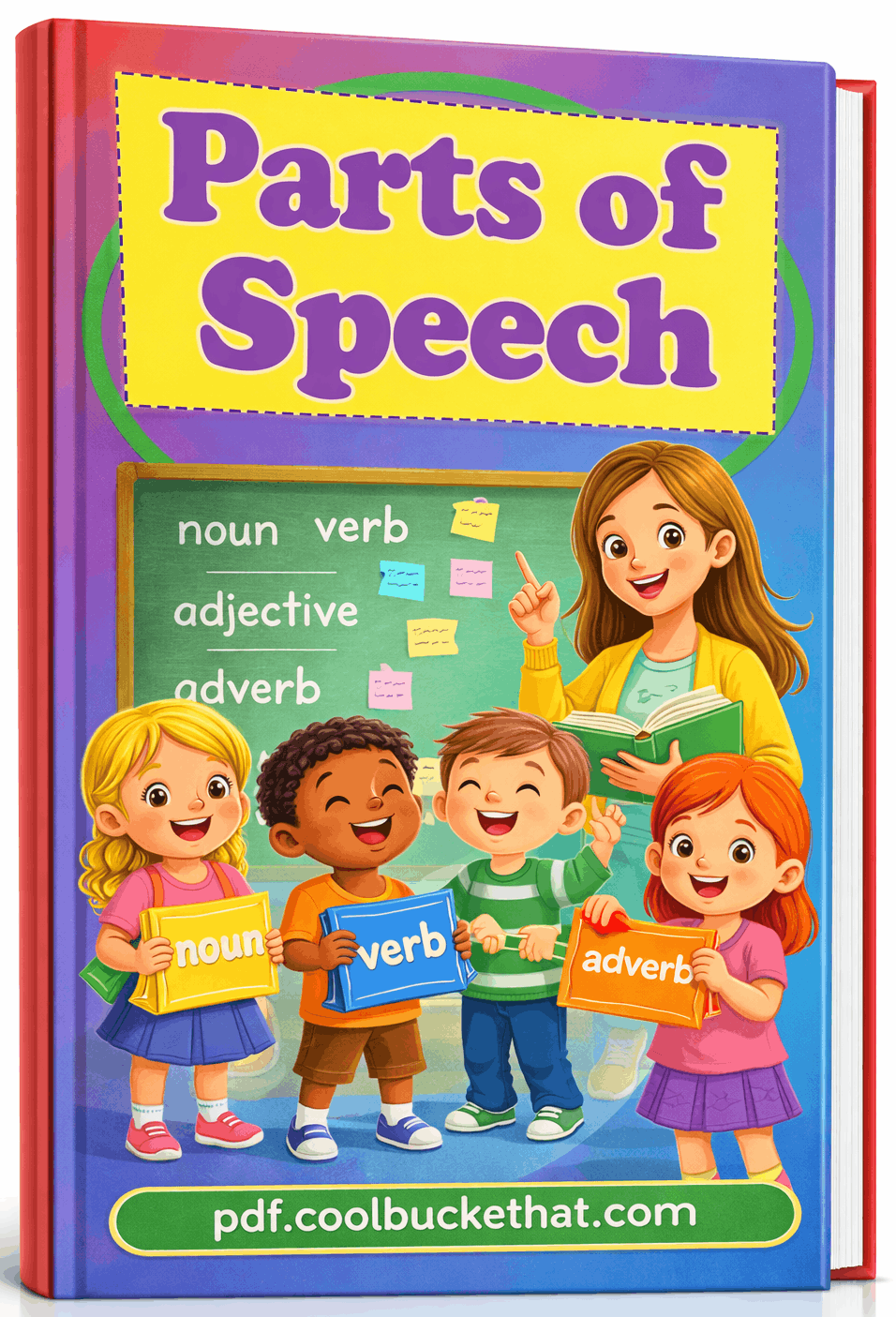
Parts of Speech: A Simple and Complete Guide
Parts of Speech are the building blocks of English grammar. Every sentence we speak or write is made up of different types of words. Each type has a special role. When you understand parts of speech, you can build clear sentences, avoid mistakes, and improve both speaking and writing skills.
In this guide, you will learn the main parts of speech, their functions, and easy examples to help you understand them quickly.
What Are Parts of Speech?
Parts of speech are categories of words based on their function in a sentence. Each word belongs to a specific group depending on how it is used.
There are eight main parts of speech in English:
Noun
Pronoun
Verb
Adjective
Adverb
Preposition
Conjunction
Interjection
Let’s explore each one step by step.
1. Noun
A noun is a word that names a person, place, thing, or idea.
Examples:
Person: teacher, doctor, Sara
Place: school, park, city
Thing: book, car, phone
Idea: love, happiness, freedom
Example Sentences:
The dog is barking.
Anna lives in London.
Nouns are one of the most important parts of speech because they often act as the subject or object of a sentence.
2. Pronoun
A pronoun replaces a noun. It helps avoid repetition.
Common Pronouns:
I, you, he, she, it
we, they
him, her, them
Example:
Instead of saying:
Maria is happy. Maria is kind.
We say:
Maria is happy. She is kind.
Pronouns make sentences smoother and easier to read.
3. Verb
A verb shows action or a state of being.
Action Verbs:
Example:
The boy runs fast.
Linking Verbs:
Example:
She is tired.
Without verbs, sentences cannot express action or meaning.
4. Adjective
An adjective describes a noun. It gives more information about size, color, shape, or quality.
Examples:
Example Sentences:
She has a red bag.
It is a small house.
Adjectives make writing more interesting and detailed.
5. Adverb
An adverb describes a verb, adjective, or another adverb. It often tells how, when, where, or how often something happens.
Many adverbs end in “-ly.”
Examples:
quickly
slowly
very
yesterday
Example Sentences:
He runs quickly.
She speaks very softly.
Adverbs add extra detail to actions.
6. Preposition
A preposition shows the relationship between a noun (or pronoun) and other words in a sentence.
Common Prepositions:
Example Sentences:
Prepositions often show location or time.
7. Conjunction
A conjunction connects words, phrases, or sentences.
Common Conjunctions:
Example Sentences:
I like tea and coffee.
She was tired but happy.
Conjunctions help combine ideas smoothly.
8. Interjection
An interjection shows strong emotion. It is often followed by an exclamation mark.
Examples:
Example:
Wow! That is amazing!
Interjections are usually used in informal speech.
Why Parts of Speech Are Important
Understanding parts of speech helps you:
When you recognize how words function, grammar becomes easier.
Example Sentence Breakdown
Let’s look at a full sentence:
The small dog runs quickly in the park.
Breaking sentences into parts helps you understand structure clearly.
Tips to Master Parts of Speech
Practice identifying words in sentences.
Read regularly to see grammar in action.
Write simple sentences and label each word.
Complete grammar exercises regularly.
Practice makes grammar natural over time.
Final Thoughts
Parts of Speech form the foundation of English grammar. Each word in a sentence has a specific role. When you understand these roles, communication becomes clearer and more confident.
Start with simple examples. Practice daily. Build your knowledge step by step.
Strong grammar begins with understanding the parts of speech—and once you master them, the rest becomes much easier.