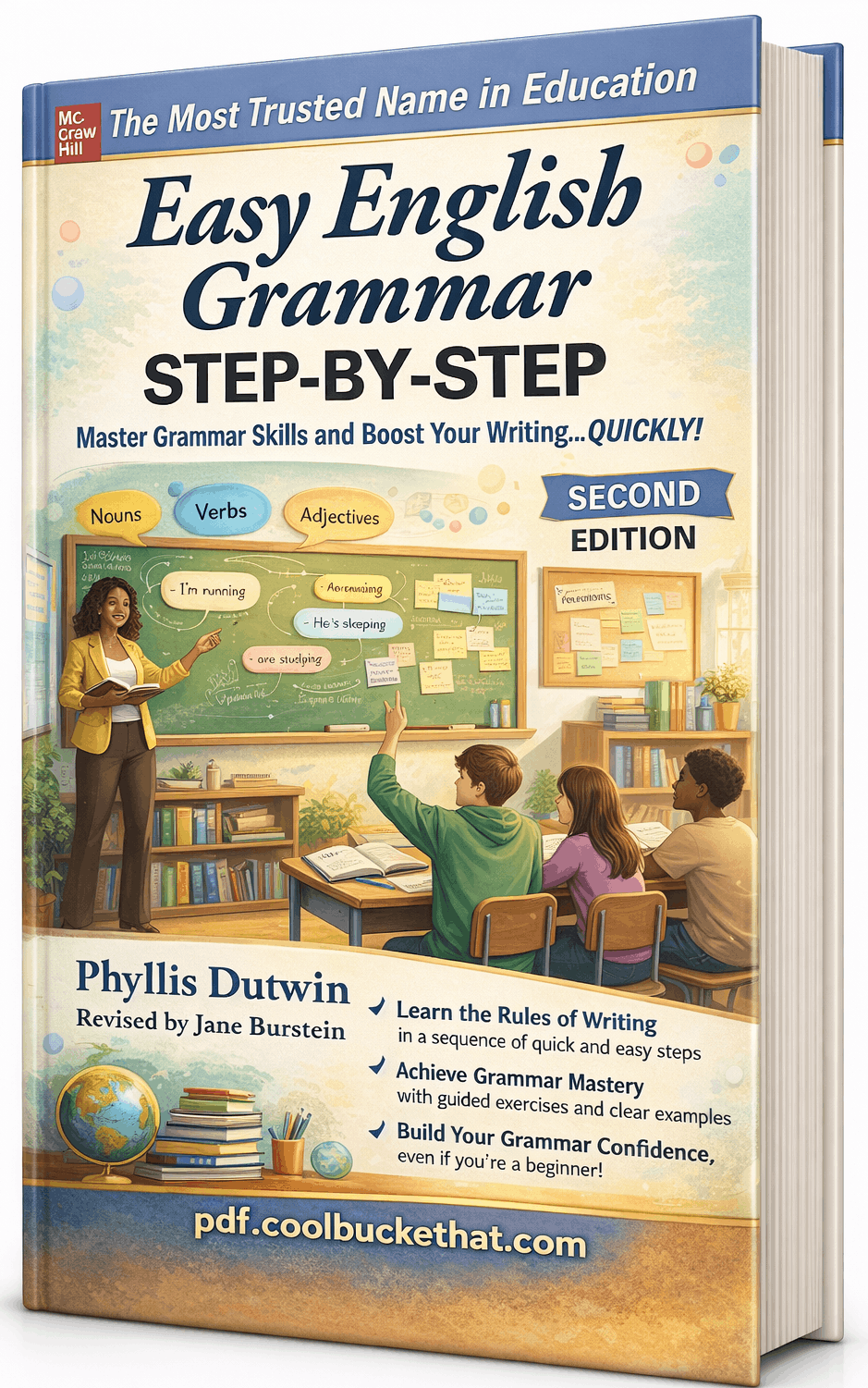
Easy English Grammar Step-by-Step Guide for Beginners
Easy English Grammar Step-by-Step is the best way to learn grammar without feeling confused. When grammar is learned in small steps, it becomes clear and practical. Instead of memorizing many rules at once, you build a strong foundation first. Then you add new skills slowly.
This guide teaches English grammar in a simple order. Each step includes short explanations and examples you can copy in your speaking and writing.
Step 1: Learn the Verb “To Be” (Am / Is / Are)
This is the most important verb for beginners.
Positive
I am happy.
He is a student.
They are friends.
Negative
I am not tired.
She is not here.
We are not late.
Questions
Are you okay?
Is she at home?
Am I late?
✅ Practice tip: Make 5 sentences about yourself using am/is/are.
Step 2: Use Subject Pronouns (I, You, He, She, It, We, They)
Pronouns replace names.
Subject pronouns help you speak faster and avoid repetition.
Step 3: Learn Articles (A / An / The)
A / An (general)
I have a car.
She has an apple.
Use a before consonant sounds: a book, a cat
Use an before vowel sounds: an egg, an idea
The (specific)
✅ Practice tip: Look around your room and name 10 things using a/an/the.
Step 4: Present Simple (Daily Routine)
Use present simple for habits, routines, and facts.
Structure
Subject + base verb
I work every day.
They play football.
He / She / It adds -s
He works every day.
She plays football.
✅ Common mistake:
Time words:
Step 5: Present Continuous (Happening Now)
Use present continuous for actions happening now.
Structure
am/is/are + verb + ing
I am studying now.
She is cooking.
They are watching TV.
Time words:
✅ Practice tip: Say what you are doing now in English.
Step 6: Past Simple (Yesterday / Last Week)
Use past simple for finished actions in the past.
Regular verbs (+ed)
I watched a movie.
She visited her aunt.
Irregular verbs (special form)
go → went
eat → ate
see → saw
Examples:
✅ Negative
I did not (didn’t) go.
She didn’t call.
Important rule: after didn’t, use base verb.
Step 7: Future (Will / Going To)
Will (quick decisions, promises)
I will call you later.
I will help you.
Going to (plans)
✅ Practice tip: Write 5 sentences about your plan for next week.
Step 8: Questions (Do / Does / Did)
Present Simple Questions
Do you like tea?
Does he work here?
Past Simple Questions
Did you go yesterday?
Did she call you?
✅ Key rule: after do/does/did, use base verb.
Step 9: Common Prepositions (In / On / At)
Place
in the room
on the table
at the bus stop
Time
in July / in 2026
on Monday / on Friday
at 6 PM / at night
✅ Practice tip: Make 6 sentences (3 for place, 3 for time).
Step 10: Build Better Sentences (Because, And, But)
Linking words make your English smoother.
These connectors improve speaking and writing quickly.
Simple Daily Practice Plan (10–15 Minutes)
3 minutes: read examples aloud
5 minutes: write 5 sentences
5 minutes: speak those sentences aloud
2 minutes: correct mistakes
Consistency matters more than long study sessions.
Final Thoughts
Easy English Grammar Step-by-Step works because it builds skills in the right order. Start with am/is/are, then move to simple tenses, questions, and linking words. Keep your practice short and daily.
If you want, tell me your current level (beginner / elementary / intermediate) and I can make a 7-day step-by-step grammar plan with daily exercises and answers.